For Physical AI
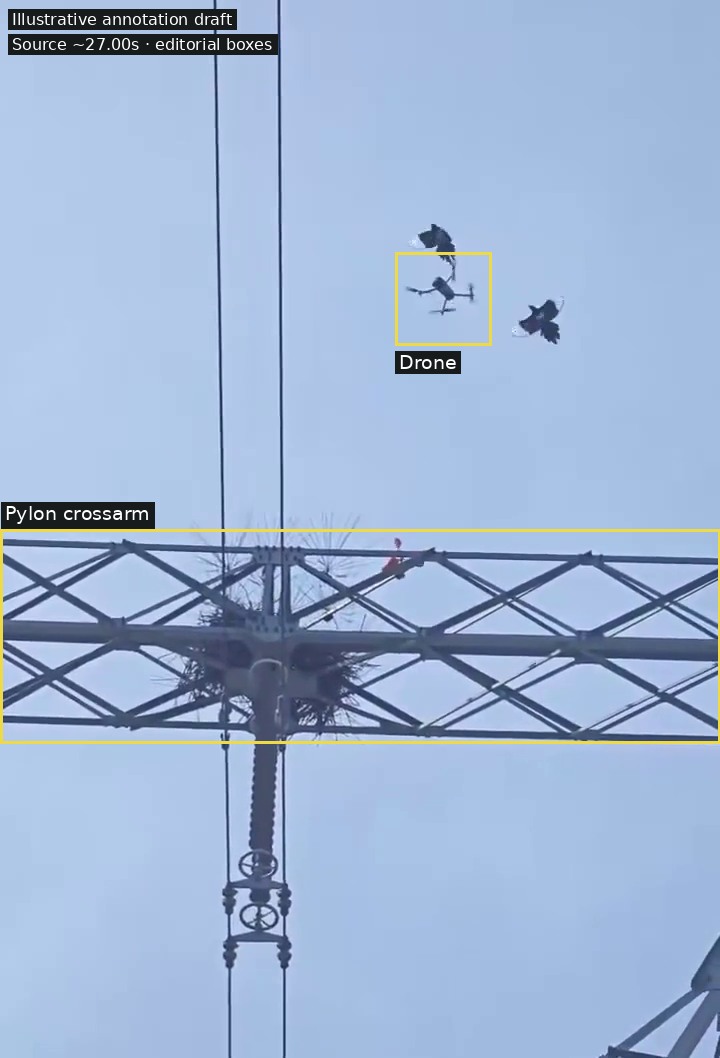
Selected objects and scene features.
- Objects
- Drone; selected bird at 25–25.5 s
- Infrastructure
- Transmission pylon crossarm
- Handoff
- Frame-linked annotation coordinates
See how ground, air and maritime footage becomes object labels, scene features and structured observations. Source and review notes distinguish saved annotations from illustrative drafts.
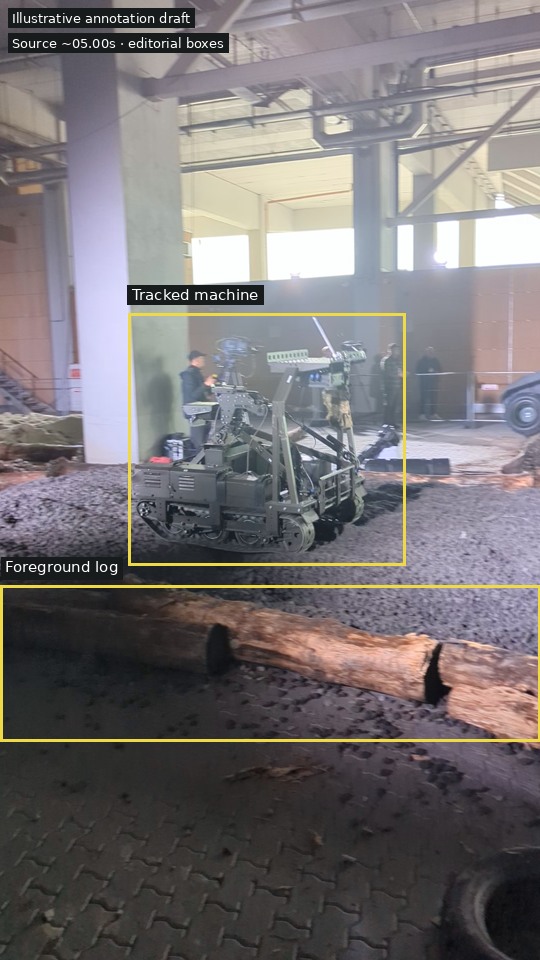
A tracked machine traverses an indoor obstacle course. Selected object annotations connect the machine to its surroundings.
Video could not load. View the annotated frame or .
Editorial boxes on sampled frames of real footage, with linear interpolation, prepared to illustrate a possible project output. No validated tracking, condition assessment or production export is claimed.
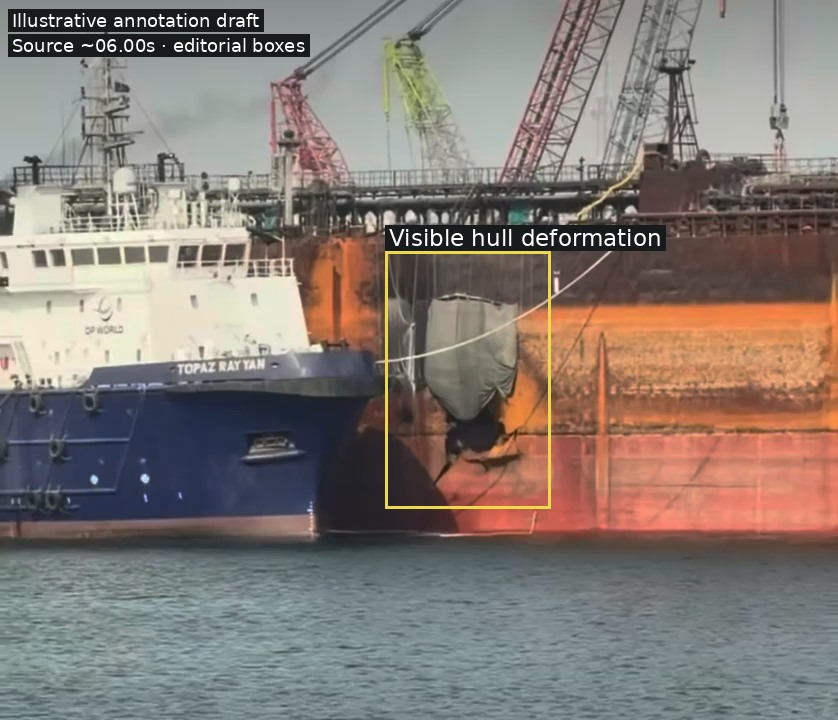
Read the annotation & observation recordVisible hull deformation can be recorded alongside vessel annotations, while keeping cause and operational condition unresolved.
Video could not load. View the annotated frame or .
Editorial boxes on sampled frames of real footage, with linear interpolation, prepared to illustrate a possible project output. No validated tracking, condition assessment or production export is claimed.
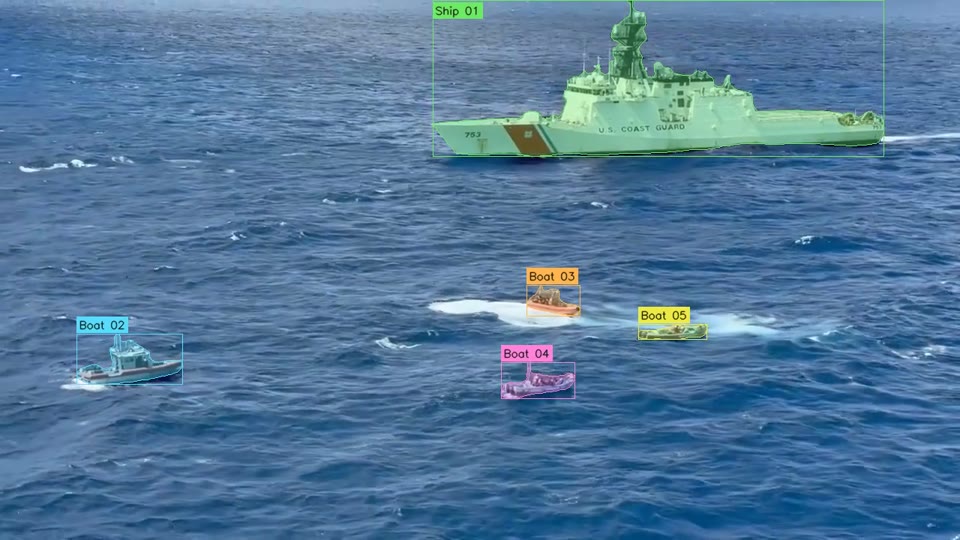
Read the annotation & observation recordVessel masks and object labels make this recording useful for a perception dataset. View the annotated frame or play the short excerpt.
Video could not load. The annotated frame and record remain available above.
An overhead recording of vessels on open water. The saved annotation adds vessel masks and object labels. This is frame 540, at 18.0 seconds of the source recording.
The four-second annotated excerpt starts at 16.5 seconds in the source recording.
Annotation example carried forward from the FORTMOSA expo materials. Source recording: cg_interdiction.
Reviewed seeds with machine propagation. The saved draft is structurally validated and has sampled visual review. It is not fully human-approved ground truth.
A delivery would agree label definitions, review coverage, metadata and export format for your task.
Different scenes need different checks. Explore masks, object tracks and human corrections in real footage. All clips are silent and play on request.
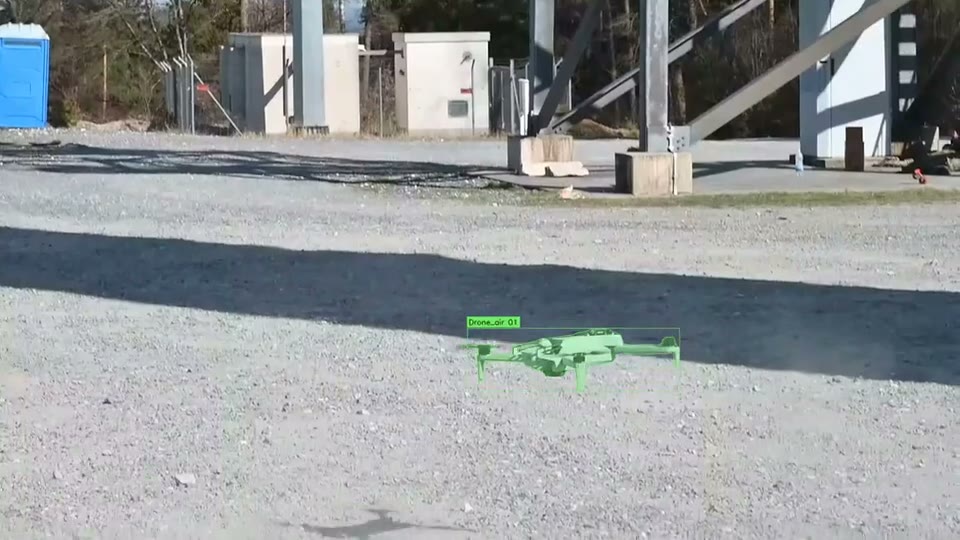
Follow an object as its appearance changes. The mask marks the drone; the track links its position across frames.
Video could not load. View the annotated frame or .
Draft annotation · 2.5-second clip
One drone is annotated. Dust obscures fine edges; background structures are excluded. This is a research draft, not accepted training ground truth.
Collector 1014978 · “173rd Airborne Gets Comfortable With Drones”, segment 23, collected via Funker530.
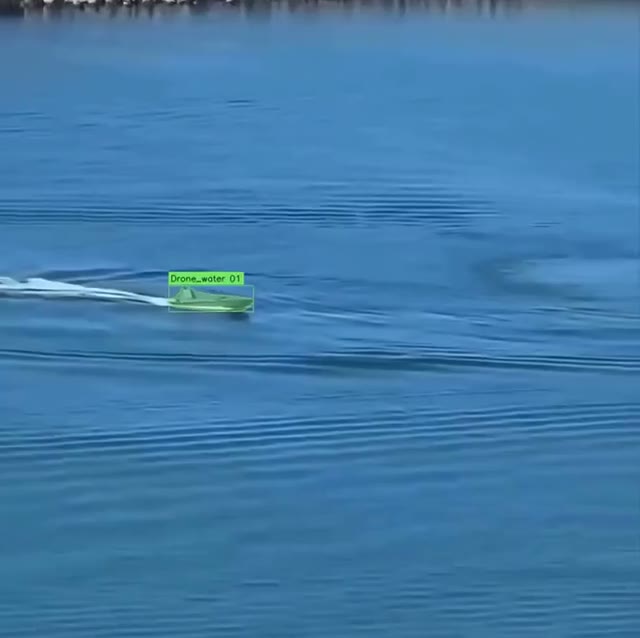
Keep a moving object distinct from reflections and wake. The saved mask and track show what the annotation follows.
Video could not load. View the annotated frame or .
Draft · sampled review · 4-second clip
Reviewed seeds with machine propagation, structural validation and sampled visual review. The complete track has not been human-approved.
Sochi port recording · FORTMOSA expo annotation bundle. Excerpt starts at 4.5 seconds in the source.
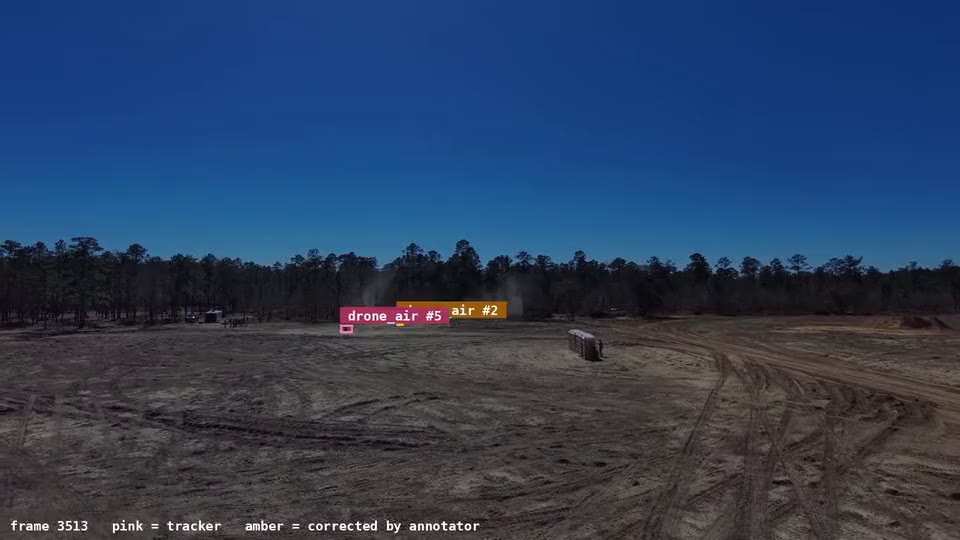
Small objects are easy to miss. Pink boxes show tracker output; amber boxes show corrections made by an annotator.
Video could not load. View the annotated frame or .
Reviewed tracks · 10-second excerpt
The accompanying export reports every track reviewed and 2,399 of 5,287 boxes adjusted across the full flight test. These are review counts, not an accuracy score.
Collector flight-test export · source frames 3510–3809 (1:57–2:07). The website has not independently audited every box.
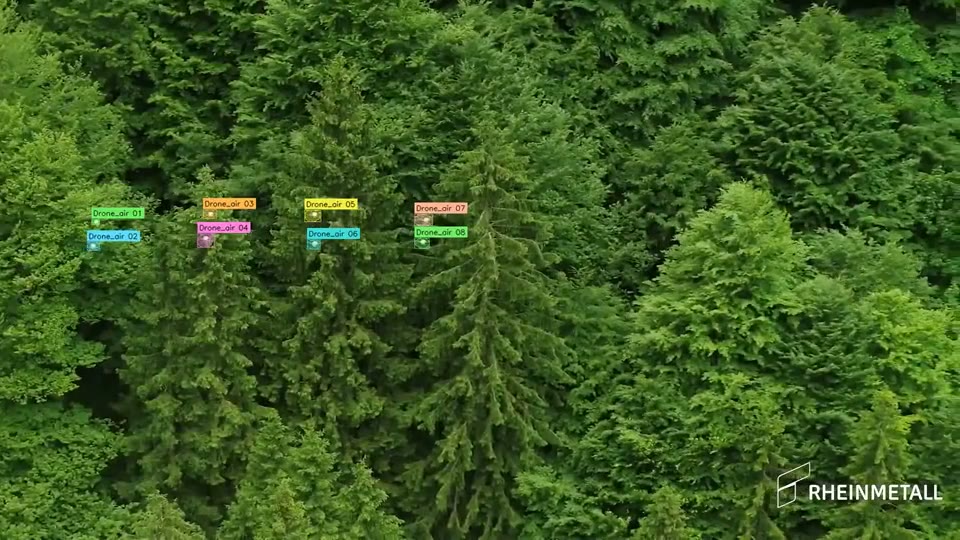
Keep separate identities as objects move and overlap. Each colour belongs to a saved object track.
Video could not load. View the annotated frame or .
Draft annotation · 2.8-second clip
Eight drones are annotated within declared windows. Close overlap, exits and missing masks need further review; smoke and debris are excluded.
Collector 1021452 · “Skynex Anti-Air System Smokes Drones”, segment 00, collected via Funker530. Rheinmetall watermark retained.
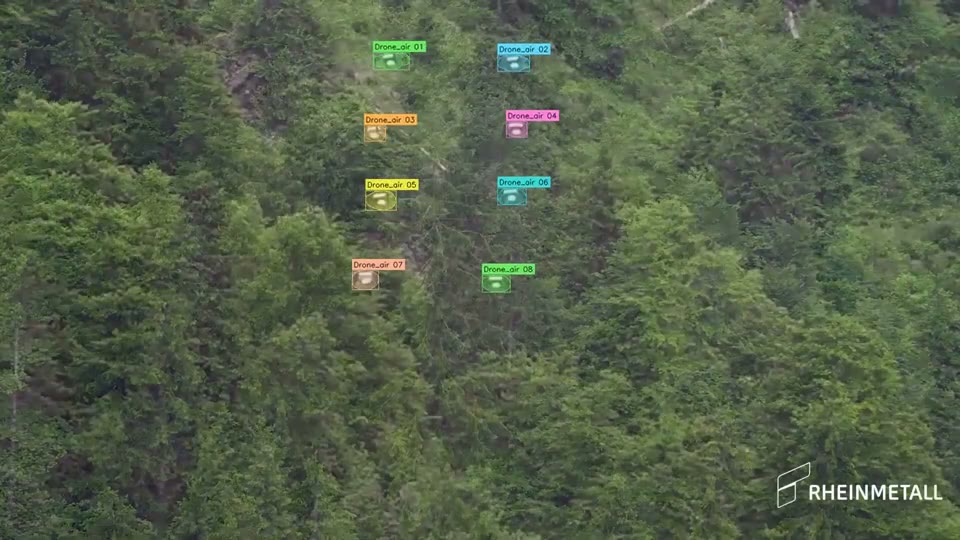
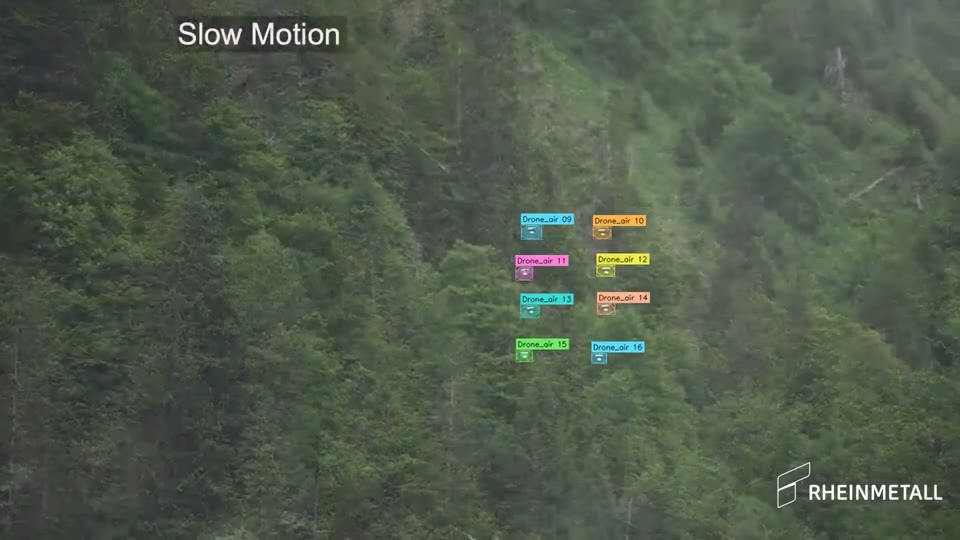
A recording shows a group of drones, then repeats the sequence in slow motion. Recognising the replay helps avoid counting the same objects again.
Eight drones in the opening sequence.
Video could not load. View the annotated frame or .
The same group appears again later in the recording.
Video could not load. View the annotated frame or .
Keep the relationship with the footage. A new appearance or annotation ID does not necessarily mean a new object.
Both come from collector clip 1021453. Its annotation notes identify eight drones shown twice, with 16 appearance IDs across the opening and replay. The source itself labels the replay “Slow Motion”.
“Skynex Anti-Air System Smokes Drones”, segment 01, collected via Funker530. Existing Rheinmetall watermark and annotation colours retained.
The excerpts use saved draft annotations with partial object coverage. Overlap and missing masks still need human review.
The relationship is explained here from the footage and its notes. This is not an automated deduplication result or a verified event timeline.
Explore a source-grouping workflowCan a generated record be inspected against the frame it describes? This synthetic example pairs one camera image with its generated reference. The target is only a few pixels across; the enlarged detail makes it easier to inspect.


Object present · reference position marked640 × 480 px
These coordinates describe the object-present frame. The absent view is its matched background, not another labelled target.
Supplied synthetic research material: Axair / detection research inputs. Sweep provider recorded as Axair GeoEngine.
Controlled scenes can add conditions that are difficult to collect. Keep synthetic and real data distinguishable, and check whether the generated conditions serve the task.
This saved image and reference demonstrate a matched record. They do not establish calibrated sensors, a live LOKE simulator integration or performance on real footage. Partner support and exports require a defined scope.
Follow one recording through its reposts, then compare a second viewpoint and a claimed update. Select a recording to inspect what is known and what still needs checking.
A civilian recording is reposted twice, a fixed camera offers another viewpoint, and a later drone post claims the route has reopened. Explore how to keep these records and their unresolved claims separate. This is a workflow illustration, not incident evidence.
A fictional access-route disruption
Publication order is not occurrence time.
Public post A, a reshare B and a cropped excerpt C appear to carry the same recording. Grouping them avoids counting repeated circulation as independent corroboration.
The caption's location and recording time are unverified. The earliest located post is not necessarily the original recording.
A pilot could work with agreed fixed-camera recordings, drone footage and civilian media shared publicly during a crisis. Preserve each publication's history even when recordings are grouped.
Captions, dates and claimed locations are assertions to assess. Edited copies and independent viewpoints need separate relationships.
A source-linked timeline, grouped observations, review decisions and unresolved questions. Begin with one incident type, one context and a defined time window.
Occurrence time, publication time and ingestion time remain distinct. A detection or a source's report is not a confirmed incident.
Discuss a retrospective pilot